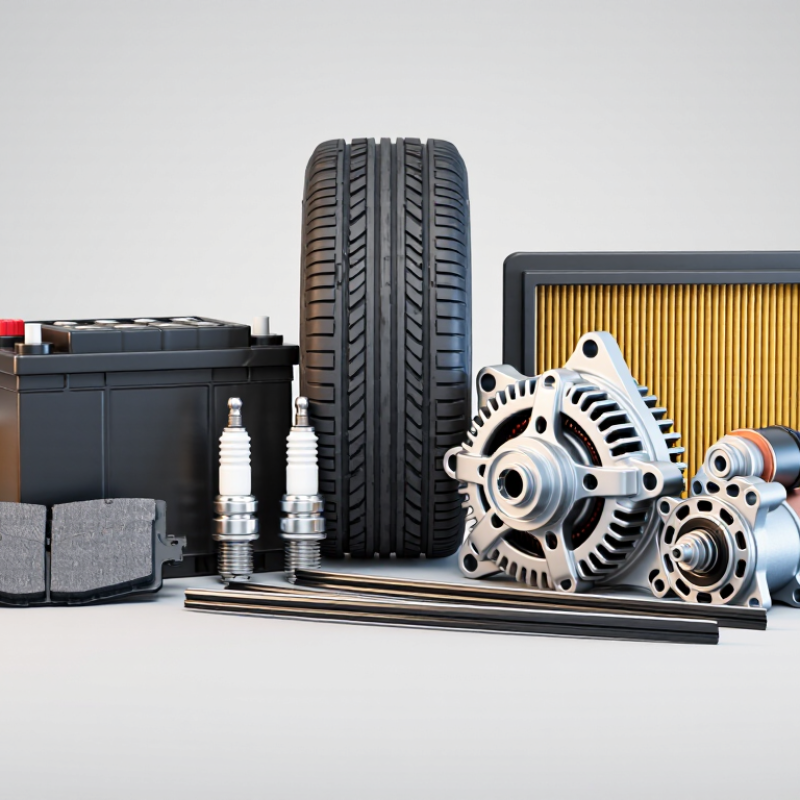
A modern car depends on dozens of components, but a small group needs regular attention or replacement. Auto Spare Parts such as oil filters, brake pads, batteries, and tires directly affect everyday reliability and safety. Other common items, including spark plugs, air filters, wiper blades, alternators, starters, and drive belts, can cause trouble when worn or faulty. The warning signs may be subtle: a slower engine start, a squeal near the wheels, or streaks left across the windshield. Not always obvious.
This guide explores ten widely used replacement parts and explains what each one does, why it matters, and when inspection may be sensible. A ranking is only a starting point; actual needs vary with vehicle design, mileage, road conditions, and maintenance history. For example, brake pads may wear faster in stop-and-go traffic, while a battery’s service life can change with climate and use. A weak battery can resemble a starter problem, so replacing parts by guesswork may waste money. Fitment matters. Check the owner’s manual or vehicle specifications before buying, and ask a qualified technician when a fault is unclear. Even routine parts differ in size, material, and recommended replacement intervals. The details are not always tidy, and a list cannot diagnose a particular car. Its purpose is to help drivers recognize important components, ask better questions, and make more informed maintenance decisions.
Define the Ranking by Replacement Frequency, Safety Risk, and Repair Demand
What Are the Top 10 Auto Spare Parts?
Define the Ranking by Replacement Frequency, Safety Risk, and Repair Demand
A useful top ten should weigh how often parts wear out, how dangerous failure can be, and how often repairs bring vehicles into shops. On that basis, the list includes tires, brake pads and rotors, batteries, wiper blades, engine and cabin filters, spark plugs, ignition coils, oxygen sensors, alternators, and water pumps. It is a practical ranking, not a universal sales chart: vehicle age, climate, and driving habits shift demand. NHTSA’s 2022 Traffic Safety Facts: Tires documents hundreds of deaths in tire-related crashes, making tires a high-risk replacement even when they are not replaced most frequently. Brake wear also deserves attention; thin pads can lengthen stopping distances and score rotors.
Repair data adds another lens. CarMD’s 2024 Vehicle Health Index, based on 2023 check-engine repairs, highlights components such as oxygen sensors, ignition coils, and spark plugs among common fixes. That dataset covers only check-engine repairs, not every part sold or replaced, so it should not be treated as a complete market ranking. Still, it signals persistent repair demand for emissions and ignition components. Some rankings will miss local realities.
Tips: Check tire tread and pressure monthly, listen for brake squeal, and replace wipers when they leave streaks. Keep service records; small notes can reveal repeat failures. The order is imperfect, but safety risk should never be hidden behind replacement frequency.
Set the Context: U.S. Vehicle Age Reached 12.6 Years in 2024 (S&P Global)
The average age of U.S. light vehicles reached 12.6 years in 2024, according to S&P Global Mobility. That record points to a growing need to maintain older cars, where wear often appears in ordinary, frequently used components. Age alone does not predict failure. Driving conditions and maintenance matter, too.
Common replacement parts include batteries, tires, brake pads, air filters, oil filters, windshield wipers, spark plugs, alternators, starter motors, and shock absorbers. A weak battery may struggle on a cold morning; worn wipers can leave streaks across the windshield. Small clues matter.
S&P Global Mobility’s vehicle-age measure offers useful context, but it does not rank parts by replacement frequency. For an individual vehicle, the owner’s manual and a qualified inspection provide better guidance than a generic top-ten list. Check tire tread and battery condition regularly, and pay attention to changes in braking or starting. Older vehicles can remain reliable, but a missed inspection may turn a modest repair into a more disruptive one. That deserves attention.
Top 10 Wear Parts: Tires, Brakes, Batteries, Filters, Plugs, Belts, and Wipers
What Are the Top 10 Auto Spare Parts?
Top 10 Wear Parts: Tires, Brakes, Batteries, Filters, Plugs, Belts, and Wipers
Wear parts need regular checks because road conditions, driving habits, and climate affect their lifespan. Tires lose tread and grip; replace them when tread is low or damage appears. Brake pads wear with use, while rotors can become scored or uneven. A battery may struggle to start the engine, especially in cold weather. Watch for slow cranking or corrosion around its terminals.
Filters protect key systems. The engine oil filter traps contaminants, while the air filter helps keep dust from entering the engine. A cabin air filter catches dust and pollen inside the vehicle. Spark plugs support reliable combustion, and worn plugs can cause rough idling. Drive belts may crack or fray, and worn wiper blades can leave streaks across the windshield. Small signs matter.
Tips: Check tire pressure when tires are cold, and inspect tread across the full width. Follow the vehicle manual for service intervals. Replace parts based on inspection, not guesswork; even a clean-looking filter may need attention. Some wear is easy to miss.
Complete the List: Alternators and Starters as Key Replacement Parts
Alternators and starters are easy to overlook until the engine will not start. The alternator replenishes the battery and supplies power to electrical systems while the engine runs. The starter draws battery current to turn the engine over. Small parts. Big consequences. A slow crank, dim dashboard lights, or a battery warning lamp can point toward charging or starting trouble, but symptoms alone do not identify the failed part.
S&P Global Mobility reported that the average age of U.S. light vehicles reached 12.6 years in 2024. Older vehicles may need more replacement work, though age alone does not prove an alternator or starter is failing. A careful check should include battery condition, charging voltage, belt tension, cable connections, and voltage drop during cranking. Corrosion around a terminal can mimic a costly component failure. It is tempting to blame the starter, but that shortcut can waste a sound part. Even a sensible checklist can miss an intermittent fault, so record when the problem occurs and retest under similar conditions.
Top 10 Common Auto Replacement Parts
Approximate typical service-life midpoint, in thousands of miles
These estimates summarize broad, commonly cited service-life ranges; actual replacement timing varies with vehicle design, driving conditions, maintenance, and part quality. Alternators and starters are included as key replacement parts, not as fixed-interval maintenance items.
Explain Tire Safety: NHTSA Estimates 11,000 Tire-Related Crashes Annually
Tires deserve more attention than their place among common auto spare parts suggests. NHTSA estimates that tire-related problems contribute to about 11,000 crashes annually (NHTSA, TireWise). Underinflation can increase heat and wear, while damaged sidewalls or worn tread can weaken grip, especially on wet pavement. Looks can deceive. A tire may seem firm but still be below its recommended pressure. NHTSA advises checking pressure monthly, when tires are cold, and following the vehicle’s door-jamb placard rather than the maximum pressure printed on the tire. A gauge and a few minutes can reveal a slow leak before a dashboard warning appears.
Inspect the tread and sidewalls, too. Look for uneven wear, cracks, bulges, or exposed cords; these can signal a need for professional assessment. The spare matters as well. It may have sat beneath the trunk floor for years, losing pressure unnoticed. Check its condition and pressure according to the vehicle manual, and make sure the jack and wrench are present. A quick visual check is useful, but it cannot identify every internal defect. That limitation is easy to overlook. If a tire repeatedly loses pressure or the vehicle begins to vibrate, avoid guessing and have it inspected by a qualified tire professional. (Sources: NHTSA TireWise tire-safety guidance and NHTSA’s estimate of annual tire-related crashes.)
What Are the Top 10 Auto Spare Parts? — Tire Safety and NHTSA’s Estimate of 11,000 Tire-Related Crashes Annually
| No. |
Common Replacement Part |
Main Function |
Safety or Maintenance Fact |
| 1 |
Tires |
Provide traction, support the vehicle, and help it steer and stop. |
NHTSA estimates that tire-related problems are associated with about 11,000 crashes annually. Check tire pressure when the tires are cold, using the vehicle’s recommended pressure, and inspect tread and sidewalls regularly. |
| 2 |
Brake pads |
Press against the brake rotors to slow or stop the vehicle. |
Have the brakes inspected if you hear persistent squealing or grinding, feel unusual vibration, or notice longer stopping distances. |
| 3 |
Battery |
Supplies electrical power to start the engine and support electrical systems. |
Corrosion, slow engine cranking, or repeated starting problems can indicate that the battery or its connections need inspection. |
| 4 |
Windshield wiper blades |
Clear rain, snow, and debris from the windshield. |
Replace blades that leave streaks, skip across the glass, or have cracked or split wiping edges; clear visibility is important in poor weather. |
| 5 |
Engine air filter |
Filters dust and debris from air entering the engine. |
Inspection and replacement intervals vary by vehicle and driving conditions; follow the maintenance schedule in the owner’s manual. |
| 6 |
Engine oil filter |
Removes contaminants from engine oil as it circulates. |
It is generally serviced along with an oil change, according to the vehicle manufacturer’s maintenance schedule. |
| 7 |
Headlight and taillight bulbs |
Illuminate the road and help other road users see the vehicle. |
Check that exterior lights work regularly. Replace failed bulbs promptly and keep lenses clean. |
| 8 |
Spark plugs |
Ignite the air-fuel mixture in gasoline engines. |
Replacement intervals differ by engine and plug type; consult the owner’s manual. Misfiring or rough running warrants diagnosis. |
| 9 |
Serpentine belt |
Drives engine accessories such as the alternator and, in many vehicles, the coolant pump or air-conditioning compressor. |
Have a cracked, frayed, or noisy belt inspected. Which components it drives depends on the vehicle’s design. |
| 10 |
Fuses |
Protect electrical circuits from excessive current. |
Replace a blown fuse only with one of the specified type and rating. A fuse that blows repeatedly may signal an underlying electrical fault. |
These are commonly maintained or replaced vehicle parts, not a sales ranking. Maintenance intervals and specifications vary by vehicle; refer to the owner’s manual. The crash figure is an estimate, not a prediction of an individual driver’s risk.
Conclusion
Auto Spare Parts are commonly ranked by how often they need replacement, the safety risks they affect, and the demand they generate in repair shops. With the average U.S. vehicle age reaching 12.6 years in 2024, wear and aging make regular maintenance increasingly important. A practical top ten includes tires, brake components, batteries, engine air filters, cabin air filters, spark plugs, belts, windshield wipers, alternators, and starters.
Tires and brakes are especially important because their condition directly affects vehicle control and stopping ability. An estimated 11,000 tire-related crashes occur annually, highlighting the value of checking tread, pressure, and tire condition. Filters, plugs, belts, and wipers also require periodic replacement to support efficient operation and clear visibility. Batteries, alternators, and starters are key electrical and starting-system parts; replacing them when worn can help prevent unexpected breakdowns. Actual replacement needs vary with vehicle use, age, and maintenance history.

 VETOR GROUP