How to Choose the Right Tension Roller for Your Needs?

Time:2026-10-15 Author:Sophia
0%

Choosing the right Tension Roller is a practical decision, not a simple catalog purchase. The roller must match your material, machine speed, web width, and operating tension. A narrow film may need a lightweight roller with a polished surface. A heavy rubber sheet may require stronger bearings and a larger shaft. Small details matter.

Dr. David Roisum, a recognized web-handling specialist, has stated, “Tension is the most important variable in web handling.” His observation explains why roller selection affects much more than smooth movement. Incorrect tension can create wrinkles, telescoping rolls, edge damage, or unstable tracking. These problems often appear slowly. That makes them easy to underestimate.

Begin by measuring the actual web load and speed. Do not rely only on the machine’s original specifications. Check the roller’s diameter, balance, surface finish, bearing capacity, and allowable deflection. Consider whether pneumatic loading, motor control, or a dancer system is necessary. The material’s friction and sensitivity also deserve attention. Delicate film may mark under excessive pressure. Rough fabric may slip across a surface that looks suitable on paper.

Experience shows that alignment is often overlooked. Even a high-quality Tension Roller performs poorly when its shaft is tilted or its bearings are worn. I would also question the habit of choosing the strongest roller available. Excess weight can increase inertia and reduce response. The best choice balances control, durability, maintenance, and cost. There is no universal roller. Testing under real production conditions remains essential, because calculations can miss uncomfortable details.
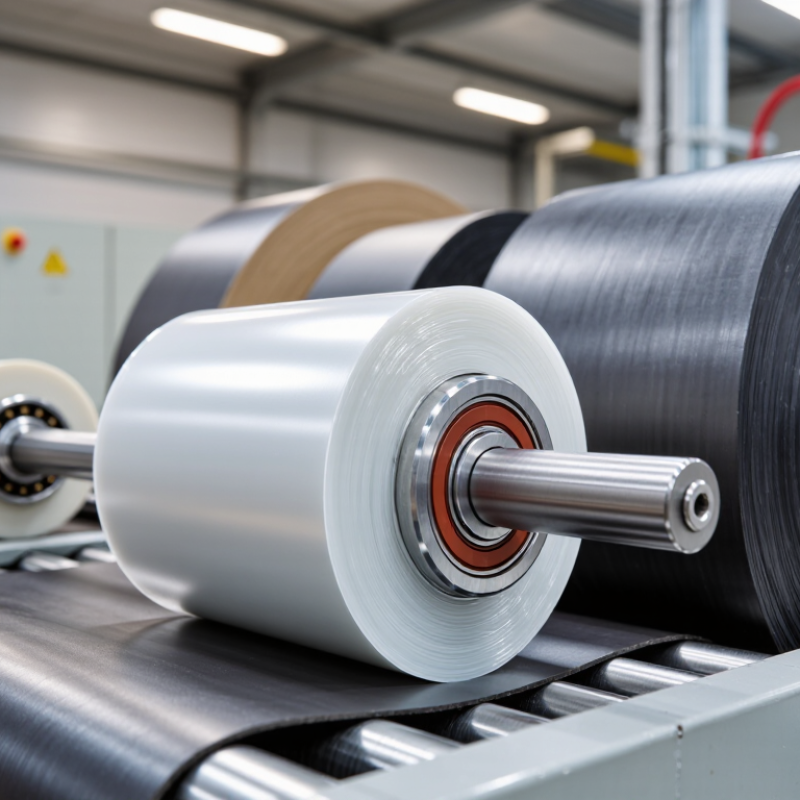
How to Choose the Right Tension Roller for Your Needs?

Understanding the Role and Function of a Tension Roller

How to Choose the Right Tension Roller for Your Needs?

Understanding the Role and Function of a Tension Roller

A tension roller controls the pull on moving material during production. It helps keep film, paper, fabric, or wire stable and aligned. Without steady tension, wrinkles, stretching, and edge wandering can appear quickly. The roller transfers force through its surface, bearings, and adjustment system. A pneumatic roller responds to changing loads, while a dancer roller absorbs sudden movement. Electronic tension sensors can provide more accurate feedback. Small details matter.

The correct design depends on web width, material sensitivity, line speed, and tension range. A wider web needs balanced support across the roller face. Soft materials may require a smoother surface and lower contact pressure. Heavy materials need stronger shafts and properly rated bearings. Measure the actual tension during operation, not only during setup. In practice, operators sometimes choose a roller that is too large. That may increase cost without improving control.

Tips: Check for wrinkles near the roller exit. Inspect bearing noise and surface wear weekly. Confirm that the roller stays parallel to nearby guides. Leave adjustment room for different materials. A useful trial run should include low, medium, and high speeds. Record the results. I have found that setup records often reveal problems missed during inspection. Still, no adjustment works perfectly for every material. Recheck the system when temperature, speed, or humidity changes.

Identifying Material, Speed, and Tension Control Requirements

Choosing a tension roller starts with the material, not the catalog size. Film may stretch, foil may crease, and paper may absorb moisture. Record thickness, width, coating, surface friction, and allowable tension before selecting the roller. A 2024 report from the Flexible Packaging Association highlights flexible packaging’s continued growth, increasing demand for stable web handling and fewer production defects.

Speed changes the engineering balance. At high line speeds, roller inertia, bearing quality, surface finish, and air entrainment become critical. The International Federation of Robotics reported 541,302 industrial robots installed worldwide in 2023, showing how quickly automated production environments are expanding. That growth also raises expectations for repeatable tension control. Calculate the required roller diameter from speed and wrap conditions, then check whether the roller can maintain stability during acceleration and stopping. Small details matter.

Control requirements should match the process. A load cell system suits precise closed-loop control, while a dancer roller can absorb short-term speed variation. Pneumatic brakes may work for simpler lines, but their response can drift with pressure and temperature. In practice, I would test the roller with real material, not only an empty shaft. A clean result is not guaranteed. Dust, humidity, and uneven winding can expose weaknesses later. The American Society of Mechanical Engineers’ quality guidance also supports documented testing, calibration, and repeatable measurement. Some specifications remain uncertain until production trials reveal them.

Comparing Tension Roller Types and Surface Designs

Choosing a tension roller starts with the web, not the machine frame. Load-cell idlers suit stable feedback and precise tension measurement. Dancer rollers absorb speed changes during splicing or intermittent production. Driven rollers help control difficult films, but they can mark soft surfaces. Bowed rollers spread wrinkles across wide webs. They are useful, though alignment errors can create new wrinkles.

Surface design changes contact behavior. Polished metal works well with durable films and paper. Rubber or polyurethane coverings increase grip on slippery substrates. Grooved surfaces can release trapped air, but excessive groove depth may imprint thin films. Perforated rollers reduce air entrapment during high-speed coating. Crowned profiles support lateral spreading, while low-friction coatings reduce drag on sensitive materials. Check hardness, roughness, and chemical resistance together. One feature rarely solves every problem.

Smithers’ 2024 flexible packaging study values the global market at about 301 billion dollars in 2023 and forecasts roughly 360 billion dollars by 2028. That growth increases demand for faster, lighter, and more delicate webs. PMMI’s 2024 industry report also identifies automation and waste reduction as major machinery priorities. These trends favor rollers with measurable tension control and quick changeover. In practice, I would test the actual substrate first. Laboratory results can mislead. A roller that performs perfectly on film may scuff coated paper after a long production run. Measure tension stability, slip, edge damage, and surface marks at operating speed. Small imperfections become expensive when multiplied across thousands of meters.

Checking Compatibility, Load Capacity, and Installation Needs

Choosing a tension roller starts with compatibility, not appearance.

Check belt width, diameter, shaft size, bearing arrangement, and frame clearance. CEMA conveyor guidance recommends calculating belt tension from effective tension, wrap angle, and friction, rather than guessing from belt width. A roller that fits physically may still fail under acceleration or uneven loading.

Load capacity needs a realistic safety margin.

Include belt weight, conveyed material, impact, operating speed, and the added force from tracking adjustments. A 2023 Plant Engineering maintenance survey reported that 82% of facilities had experienced unplanned downtime, showing why small support components deserve serious attention. Confirm both radial and axial ratings. Static capacity alone is not enough.

Installation conditions can change the decision.

Measure the actual gap with the belt relaxed, then check whether technicians can remove the roller without dismantling nearby guards. ISO 15243 classifies bearing damage linked to contamination, misalignment, and inadequate lubrication, so sealing and service access matter.

I once selected a roller by nominal load only. It survived, but alignment was poor. That was my mistake.

Use the manufacturer’s test data carefully.

Compare rated life, temperature range, runout, and surface finish under your operating conditions. Record the chosen dimensions before ordering. Tiny errors become expensive.

Evaluating Maintenance, Durability, and Overall Operating Costs

How to Choose the Right Tension Roller for Your Needs?

A tension roller should be judged by operating cost, not purchase price alone. In practical web-handling work, I examine bearing access, surface wear, cleaning time, and alignment stability. A roller that needs frequent adjustment can quietly consume labor hours. It may also create wrinkles, edge damage, or uneven tension across the web.

The U.S. Department of Energy’s Operations & Maintenance Best Practices Guide reports that effective maintenance can reduce energy use by 5–20%. That matters when a poorly aligned roller increases drive resistance. Deloitte’s 2020 predictive-maintenance analysis also reported potential maintenance-cost reductions of 10–20%, although results vary by process and data quality. Treat those figures as guidance, not promises.

Durability requires more than a hard outer surface. Check shaft deflection, bearing sealing, balance quality, and resistance to dust or coating residue. A sealed bearing may lower cleaning frequency, but replacement access still matters. Ask how many minutes a normal service task requires. Minutes become production cost.

I prefer a simple cost model: purchase price, planned parts, labor, energy, scrap, and unplanned downtime. Record these values during a trial run. My own evaluations have sometimes favored a less expensive roller with easier maintenance. That was not always the right decision. Initial calculations can miss setup delays, operator training, and seasonal material changes. A short pilot with measured tension variation gives better evidence than a brochure.

How to Choose the Right Tension Roller for Your Needs? – Evaluating Maintenance, Durability, and Overall Operating Costs
Indicative values for industrial web-handling applications. Actual results depend on web material, load, speed, temperature, contamination, alignment, and maintenance quality.
Roller Type Typical Surface / Construction Typical Web Speed Typical Operating Temperature Routine Maintenance Expected Service Life Relative Initial Cost Overall Operating Cost Best-Fit Applications
Rubber-Covered Steel Roller Steel core with natural or synthetic rubber covering Up to approximately 300 m/min Approximately −20°C to 80°C Inspect cover, bearings, alignment, and buildup monthly; clean as needed 3–7 years with suitable loading and cleaning Medium Medium General-purpose films, paper, labels, laminates, and coated webs where high friction is required
Polyurethane-Covered Steel Roller Steel core with cast or bonded polyurethane covering Up to approximately 500 m/min Approximately −30°C to 90°C Inspect surface wear, bearings, and alignment every 1–3 months 5–10 years in moderate-duty service Medium–High Low–Medium High-cycle converting, abrasive webs, film processing, and applications requiring good wear resistance
Hard-Anodized Aluminum Roller Lightweight aluminum body with hard-anodized surface Up to approximately 600 m/min when dynamically balanced Approximately −40°C to 120°C Check surface condition, balance, bearings, and cleanliness every 1–3 months 7–15 years under controlled conditions Medium–High Low High-speed film, foil, paper, and clean-room or low-inertia web-handling systems
Steel Roller with Ceramic or Tungsten-Carbide Coating Precision steel core with hard, wear-resistant thermal-spray coating Up to approximately 800 m/min, subject to balance and finish Approximately −20°C to 150°C Inspect coating, runout, bearings, and contamination every 1–3 months 8–15 years in abrasive or demanding service High Low–Medium Abrasive coatings, engineered films, high-temperature processes, and long production runs
Pneumatic Tension Roller Rubber or polyurethane roller combined with pneumatic loading or pressure control Up to approximately 300 m/min Approximately 0°C to 80°C, depending on seals and cover Check air leaks, regulator accuracy, hoses, bearings, and roller cover monthly 3–8 years, depending on cycling and air-system quality High Medium–High Processes needing adjustable nip force, quick changeovers, or protection against variable web thickness
Grooved or Spiral-Grooved Roller Metal or elastomer-covered roller with machined grooves for air release Up to approximately 400 m/min Approximately −20°C to 100°C Clean grooves and inspect wear, bearings, and alignment monthly 4–10 years, depending on groove design and contamination Medium–High Medium Laminating, coating, printing, and other processes where trapped air or wrinkles must be reduced
Cost-evaluation guide: Total operating cost should include the purchase price, installation, bearing and cover replacement, cleaning time, energy consumption, production losses caused by web defects, and expected downtime. A higher initial cost can be economical when it reduces replacement frequency, web damage, or unplanned maintenance.

FAQS

What does a tension roller do?

It controls pulling force on moving film, paper, fabric, or wire. It helps prevent wrinkles, stretching, and edge wandering. Small changes matter.

Which tension roller type suits changing production speeds?

A dancer roller can absorb sudden movement during speed changes or intermittent production. A load-sensing idler provides steadier feedback. Neither option fits every line.

How should I choose the roller size?

Consider web width, material sensitivity, line speed, and tension range. Wider webs need balanced support across the roller face. An oversized roller may add cost without improving control.

Which surface design works best for delicate materials?

Smooth, low-friction surfaces can reduce drag and marking. Soft coverings may improve grip on slippery substrates. Test hardness, roughness, and chemical resistance together.

Can grooves or perforations improve roller performance?

Grooves may release trapped air, while perforations can help during high-speed coating. Excessive groove depth may imprint thin film. Check the actual substrate first.

How do I confirm the roller can handle the load?

Include web weight, material weight, acceleration, impact, speed, and tracking forces. Check radial and axial ratings. Static capacity alone is not enough.

What installation details should I check?

Measure the relaxed belt or web gap, shaft size, bearing arrangement, and frame clearance. Confirm technicians can remove the roller safely. Access is easy to forget.

How can I test a new tension roller properly?

Run low, medium, and high speeds. Record tension stability, slipping, edge damage, wrinkles, and surface marks. Inspect bearing noise and wear weekly.

When should the tension system be rechecked?

Recheck it after changes in temperature, humidity, speed, or material. Keep setup records near the machine. My earlier alignment choice was poor, and the mistake was avoidable.

Conclusion

Choosing the right Tension Roller begins with understanding its role in maintaining stable web tension, guiding materials smoothly, and supporting consistent production quality. The selection process should consider the type, thickness, and sensitivity of the material, as well as operating speed and the level of tension control required. Different roller types and surface designs can affect grip, friction, alignment, and the risk of marking or damaging the material, so each feature should match the application.

It is also important to confirm equipment compatibility, load capacity, available installation space, and connection requirements before making a decision. A reliable Tension Roller should be easy to install, durable under continuous operation, and suitable for the working environment. Finally, evaluate maintenance access, expected service life, replacement needs, and energy or downtime costs. Considering both performance and long-term operating expenses will help ensure a practical, dependable choice.


Sophia

Sophia

Sophia is a dedicated marketing professional with an exceptional depth of knowledge about her company's products and services. With a keen understanding of market trends and customer needs, she crafts insightful blog posts that not only inform but also engage readers, enriching the company’s online......