China Top Brake Cable Manufacturers How to Choose?

Time:2026-10-10 Author:Isabella
0%

Choosing among China’s top Brake Cable manufacturers requires more than comparing prices or factory photographs. A dependable supplier should prove material quality, production control, testing capability, and communication discipline. These details become important when a cable must move smoothly through a tight housing, resist corrosion, and maintain consistent braking performance.

Brake-system engineer Daniel Harper offers a practical reminder: “A reliable Brake Cable is judged by its performance after repeated use, not by its first appearance.” This principle should guide every supplier review. Ask about wire-rope construction, galvanized or stainless-steel options, housing strength, end-fitting accuracy, and tensile testing. Request samples before discussing large orders. Test them through bending cycles, temperature changes, and repeated pull loads. Real evidence matters.

Look beyond polished catalogs. Inspect factory processes, traceability records, inspection reports, and packaging methods. A serious manufacturer can explain how it controls cable diameter, coating thickness, lubrication, and assembly tolerances. It should also identify the responsible quality team. Vague answers deserve caution.

Certifications can help, but they never replace product testing. A certificate may confirm a management system, not flawless Brake Cable performance. This is where buyers sometimes move too quickly. I would not select a supplier only because it offers the lowest quotation. That decision may save money today and create warranty problems later.

Manufacturing experience, export records, engineering support, and stable lead times also deserve attention. Check references when possible. Compare samples from several factories under the same conditions. The best choice is rarely the loudest supplier. It is the one that provides repeatable quality, clear evidence, and honest answers when something needs improvement.
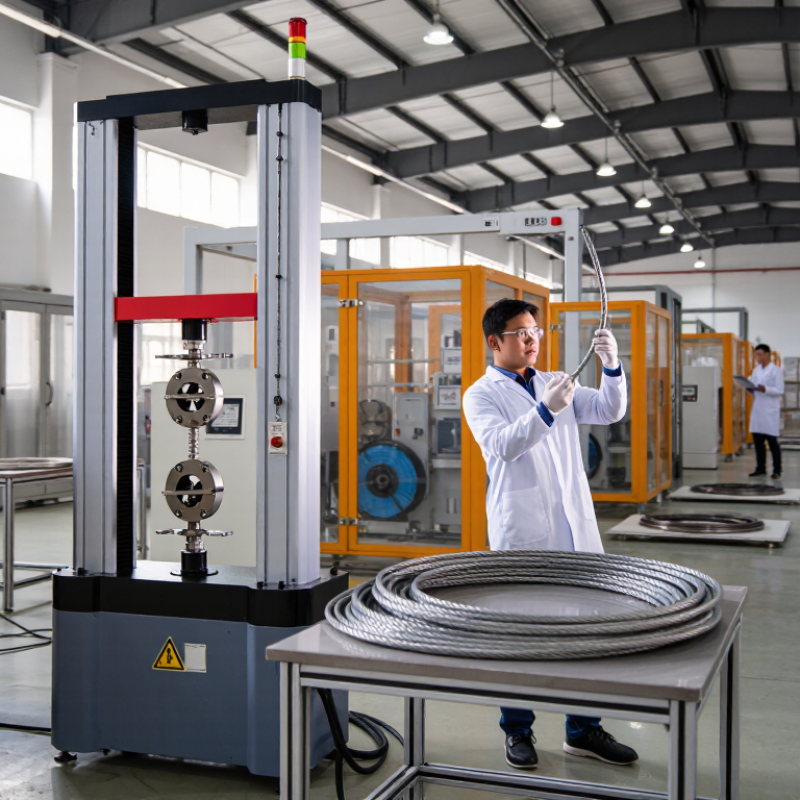
China Top Brake Cable Manufacturers How to Choose?

What Is a Brake Cable and Why Does Manufacturer Selection Matter?

China Top Brake Cable Manufacturers: How to Choose?

A brake cable transfers force from a lever to a brake mechanism. It usually includes an inner wire, outer housing, end fittings, and protective coatings. When the lever moves, the inner wire pulls the brake system into action. Simple in design, it still demands careful manufacturing.

Manufacturer selection matters because cable quality affects control, stopping response, and service life. A poorly finished wire may drag inside the housing. Corrosion can appear after repeated exposure to rain, dust, or road salt. An experienced manufacturer should explain material grades, tensile strength, coating options, and dimensional tolerances. Ask for samples and test them on the intended assembly. Check whether the factory controls crimping, cutting, and final inspection in-house. Documents are useful, but practical evidence matters more. I have found that clear drawings often prevent more problems than attractive catalogs.

Tips: Compare samples, not promises. Measure cable length, wire diameter, housing fit, and end shape. Request batch inspection records and production photos. Ask how rejected parts are handled. A lower price may help purchasing, but inconsistent tension can increase replacement costs. Also, confirm communication speed and technical support before placing a large order. This step is easy to overlook. It should not be. One honest weakness may be acceptable, but an unexplained variation deserves further testing.

Which Types of Brake Cables Are Made by Chinese Manufacturers?

Chinese brake cable manufacturers produce several types for different vehicles and riding conditions. Bicycle cables usually include stainless steel or galvanized inner wires, outer casings, and compressionless housings for sharper braking. Mountain bikes often need sealed liners because mud and water enter easily. Road bicycles may use slimmer housings to reduce weight.

Motorcycle manufacturers commonly make clutch and brake control cables with stronger wire strands, molded end fittings, and protective rubber boots. Automotive suppliers produce parking brake cables, rear brake cables, and custom assemblies for small vehicles, trailers, and utility equipment. Electric bicycles also use compact mechanical brake cables, although their dimensions vary widely. Some factories offer cut-to-length cables, threaded adjusters, different terminals, and low-friction PTFE liners. Specifications still need careful checking.

Tips: Match the cable to the vehicle model, travel distance, and fitting shape. Ask for material certificates and dimensional inspection records. A sample test is wiser than trusting a catalogue image. Check corrosion resistance with salt-spray data when the cable faces rain or coastal air. Inspect the crimped ends, because a polished housing cannot hide a weak connection. I have seen inexpensive cables perform well, but inconsistent lengths caused installation problems. That detail is easy to overlook. Request tension testing, smooth-routing tests, and packaging that prevents sharp bends. Even reliable factories can make mistakes when drawings are unclear.

China Top Brake Cable Manufacturers How to Choose? - Which Types of Brake Cables Are Made by Chinese Manufacturers?

Brake Cable Type Typical Applications Typical Inner Cable Diameter Typical Housing or Outer Sheath Common Materials Important Selection Factors Relevant Verification
Bicycle Brake Cable City bicycles, mountain bikes, road bicycles and folding bicycles Approximately 1.5–1.6 mm Usually 4 mm or 5 mm spiral-wound housing; brake housing is commonly 5 mm Galvanized or stainless-steel stranded wire; polymer-lined steel housing; PVC or nylon outer coating End fitting shape, cable length, housing compression resistance, corrosion resistance and smooth lever operation Dimensional inspection, tensile testing, corrosion testing and compatibility with ISO 4210 bicycle requirements
Electric Bicycle Brake Cable E-bikes, electric scooters and light electric mobility products using mechanical brakes Commonly about 1.5–2.0 mm Flexible polymer-coated housing, often 4–5 mm outside diameter Galvanized or stainless-steel wire, low-friction liner, PVC, PE or nylon protective jacket Water protection, routing radius, resistance to vibration, connector or sensor integration where required Cycle testing, insulation or sealing checks for integrated electrical parts, tensile strength and salt-spray testing
Motorcycle Brake Cable Motorcycles, scooters, mopeds and mechanical drum-brake systems Typically about 1.5–2.5 mm, depending on the vehicle design Approximately 5–8 mm outer sheath diameter, with flexible routing sections High-carbon or stainless-steel wire, galvanized steel conduit, PVC or rubber weatherproof cover Operating stroke, lever force, heat and water exposure, bend radius, ferrule design and end fittings Tensile and fatigue tests, operating-force measurement, dimensional inspection and corrosion evaluation
Automotive Parking Brake Cable Passenger cars, light commercial vehicles and mechanical rear parking-brake systems Often approximately 1.5–3.0 mm; exact size depends on the load requirement Usually a coated steel conduit with a protective outer jacket, commonly around 6–12 mm overall diameter High-strength steel wire, galvanized steel conduit, polymer liner, EPDM or PVC protective jacket Vehicle-specific length, attachment brackets, equalizer design, sealing, corrosion resistance and required pull load Load and stroke testing, salt-spray testing, water-ingress testing, temperature cycling and endurance testing
Push-Pull Brake Control Cable Industrial equipment, go-karts, utility vehicles and mechanical control assemblies Commonly about 2–6 mm, selected according to load and stroke Rigid or semi-rigid conduit, generally about 6–12 mm outside diameter Steel inner rod or stranded wire, wound steel conduit, nylon liner and PVC or rubber jacket Push and pull load, total stroke, backlash, mounting orientation, end-thread configuration and sealing Load-versus-stroke testing, cycle endurance, dimensional inspection and environmental exposure testing
Agricultural and Off-Road Brake Cable Small tractors, lawn equipment, utility carts and off-road machinery Typically about 2–4 mm Heavy-duty conduit, often approximately 7–14 mm outside diameter High-strength steel wire, corrosion-resistant conduit, low-friction liner and UV-resistant outer jacket Mud and water protection, vibration resistance, temperature range, high load capacity and service life Endurance, tensile, vibration, temperature, salt-spray and contamination-resistance testing
Custom Brake Cable Assembly OEM replacement parts, prototype projects and specialized mechanical brake systems Specified by the application drawing; commonly 1.5–6 mm Specified by routing, load and environmental requirements Steel or stainless-steel cable, steel conduit, polymer liner, protective coating and application-specific fittings Technical drawing control, sample approval, traceability, consistent assembly length and final inspection capability Customer-defined specification, first-article inspection, capability studies and documented production testing
How to Choose a Chinese Brake Cable Manufacturer
  • Confirm the cable type, inner-wire diameter, housing diameter, finished length, stroke and end-fitting dimensions.
  • Ask for material specifications and test reports covering tensile strength, endurance, corrosion resistance and operating force.
  • Check whether the manufacturer can provide samples, tooling, technical drawings, assembly control and batch traceability.
  • For vehicle applications, validate the cable against the applicable vehicle drawing and relevant national or international requirements.
  • All dimensions in this table are typical industry ranges; the final specification should be confirmed by application drawings and testing.

How to Evaluate China’s Top Brake Cable Manufacturers

Evaluating China’s top brake cable manufacturers requires more than comparing prices. Check their production experience, engineering staff, and quality records. Ask for material specifications, production drawings, and recent inspection reports. A reliable manufacturer should explain cable diameter, coating thickness, ferrule design, and end-fitting tolerances clearly. Vague answers deserve caution.

Tips: Send identical specifications to several factories. Compare samples, not promises. Test pulling force, bending resistance, and corrosion performance. Inspect the cable after repeated movement. Look for rough crimps, loose strands, or uneven coating. Small defects can become serious during daily use.

Factory visits or live video audits can reveal practical details. Observe storage conditions, calibration labels, worker training, and batch separation. Ask how failed parts are recorded and corrected. Request a pre-production sample and a final inspection sample. Confirm packaging prevents moisture, tangling, and scratched fittings. Delivery reliability also matters, so review capacity during busy periods. A polished factory may still have weak documentation. That is easy to miss. Keep written records of every change, because assumptions often create costly disagreements.

What Quality Standards Should Brake Cable Suppliers Meet?

China Top Brake Cable Manufacturers: How to Choose?

A qualified brake cable supplier should prove more than factory capacity. ISO’s 2022 Survey recorded over 1.26 million ISO 9001 certificates worldwide, but certification alone cannot confirm cable safety. Ask for controlled drawings, material traceability, and batch inspection records. Stainless steel strands should resist corrosion, while the outer housing must maintain compression strength under repeated pulls. Small details matter. Frayed ends are unacceptable.

For bicycle cables, testing should align with ISO 4210-2:2023, including braking performance and durability requirements. For automotive applications, suppliers should identify the relevant national or UNECE braking regulations before production. Request test data for tensile strength, fatigue cycles, salt-spray exposure, temperature changes, and cable return force. A supplier that only provides a polished sample is not ready for serious sourcing. In practice, I would also inspect crimp consistency and measure cable movement after installation. These checks often reveal weaknesses hidden by appearance.

Independent laboratory reports improve reliability, especially when test methods and sample numbers are clearly stated. Factory audits should examine calibration records, incoming wire inspection, and nonconforming-product controls. One weakness remains common: buyers sometimes accept a passing test from one batch as permanent proof. That is not enough. Require periodic retesting, signed inspection records, and retained samples. A capable manufacturer should welcome difficult questions, although no quality system is perfect.

How to Choose the Right Chinese Brake Cable Manufacturer?

How to Choose the Right Chinese Brake Cable Manufacturer?

Selecting a Chinese brake cable manufacturer requires more than comparing factory prices. Check experience with your exact application, including bicycle, motorcycle, or industrial assemblies. Ask for cable diameter, housing material, tensile-strength records, and corrosion-test results. A reliable supplier should provide batch traceability and clear inspection procedures. It should also explain how production defects are handled.

Independent testing matters. ISO 4210-2:2023 specifies safety requirements for bicycle braking systems, including performance and strength checks. For road vehicles, suppliers should understand applicable national standards and documented validation methods. The World Health Organization’s Global Status Report on Road Safety 2023 records about 1.19 million annual road deaths worldwide. That figure does not prove a cable caused failures, but it shows why braking components deserve disciplined verification.

Request recent test reports, not attractive samples alone. Confirm wire-rope construction, end-fitting pull-out force, salt-spray duration, and operating-temperature limits. Ask whether the factory controls incoming steel and housing batches. A useful audit includes production-floor photos, calibration records, and random sample testing. Some manufacturers may offer excellent prototypes but weaker mass-production controls. I have seen this gap overlooked. It deserves a second check. Compare communication speed, engineering answers, packaging protection, and delivery consistency. A slightly higher quotation may reduce replacement claims when specifications are stable and evidence is complete.

How to Choose the Right Chinese Brake Cable Manufacturer

A practical procurement evaluation framework for comparing manufacturers without relying on company or brand names.

The suggested weighting emphasizes product consistency, corrosion resistance, mechanical performance, traceability, delivery reliability, and cost. Buyers should verify test reports, material specifications, production controls, and sample performance before placing a bulk order.

FAQS

What is a brake cable?

A brake cable transfers force from a lever to a braking mechanism. It usually contains an inner wire, outer housing, fittings, and protective coatings. Small parts matter.

Why does manufacturer selection matter?

Manufacturing quality affects control, stopping response, and service life. A rough wire may drag inside the housing. Corrosion may develop after rain, dust, or road salt exposure.

What should buyers inspect in a brake cable sample?

Measure the cable length, wire diameter, housing fit, and end shape. Inspect crimped connections closely. A polished housing cannot hide a weak fitting.

Which brake cable types are commonly produced?

Common types include bicycle, motorcycle, automotive, trailer, and electric bicycle cables. Options may include threaded adjusters, different terminals, and cut-to-length assemblies. Dimensions vary widely.

How should a bicycle brake cable match its use?

Mountain bikes often need sealed liners for muddy and wet routes. Road bicycles may use slimmer housings to reduce weight. Compressionless housings can provide sharper braking.

What materials and features should buyers ask about?

Ask about stainless steel or galvanized inner wires. Check tensile strength, coating type, dimensional tolerance, and protective boots. Low-friction liners may improve cable movement.

How can buyers evaluate production quality?

Request samples, batch inspection records, material certificates, and production photos. Ask whether cutting, crimping, and final inspection happen internally. Documents help, but testing helps more.

What tests are useful before placing a large order?

Test smooth routing, cable tension, fitting strength, and housing movement. Use salt-spray data for wet or coastal conditions. Packaging should prevent sharp bends.

Can a low-priced brake cable be reliable?

Sometimes, inexpensive cables perform well. Inconsistent lengths can still cause installation problems and extra replacements. I may overlook communication quality, but delayed technical support creates real trouble.

What questions should buyers ask before ordering?

Confirm the intended vehicle, travel distance, dimensions, fitting shape, and delivery details. Ask how rejected parts are handled. One known weakness may be acceptable. Unexplained variation deserves more testing.

Conclusion

Choosing the right Brake Cable manufacturer in China is essential for ensuring reliable braking performance, rider safety, product durability, and consistent supply. A brake cable typically consists of an inner wire and an outer housing, and it may be designed for bicycles, motorcycles, vehicles, or other mechanical systems. Chinese manufacturers can produce various cable types, including standard, stainless steel, coated, customized, and high-flexibility models. Understanding the application, operating environment, required dimensions, and performance expectations is the first step toward selecting a suitable supplier.

When evaluating manufacturers, buyers should examine production capabilities, material traceability, quality-control procedures, testing equipment, customization services, delivery capacity, and communication efficiency. Reliable suppliers should meet applicable industry requirements and maintain consistent standards for tensile strength, corrosion resistance, smooth operation, dimensional accuracy, and fatigue performance. Comparing samples, technical documents, inspection records, pricing, lead times, and after-sales support can help buyers make a balanced decision. The best manufacturer is not necessarily the lowest-cost option, but the one that offers dependable quality, stable production, transparent cooperation, and long-term value.


Isabella

Isabella

Isabella is a dedicated marketing professional with a sharp focus on driving brand growth and engagement through strategic content creation. With an extensive background in digital marketing, she combines her passion for storytelling with her keen understanding of industry trends to deliver......