How to Choose the Right Taper Roller Bearing?

Time:2026-11-20 Author:Oliver
0%

Choosing the right Taper Roller Bearing starts with the real operating conditions, not a catalog photo. The bearing must support both radial and axial loads, but the balance between them matters. A gearbox shaft carrying helical-gear thrust needs a different arrangement from a wheel hub facing changing cornering forces. Record the load direction, speed, operating temperature, and expected service life. Small details count.

Henry Timken is a landmark name in bearing history. The following is an editorial selection principle, not a verified quotation from him: “Choose for the load path and operating conditions, not dimensions alone.” That distinction can prevent costly mismatches. A bearing with the correct bore may still fail early if preload, lubrication, or mounting is wrong. Check the manufacturer’s load ratings and installation guidance. Measure the shaft and housing carefully; a few hundredths of a millimeter can matter.

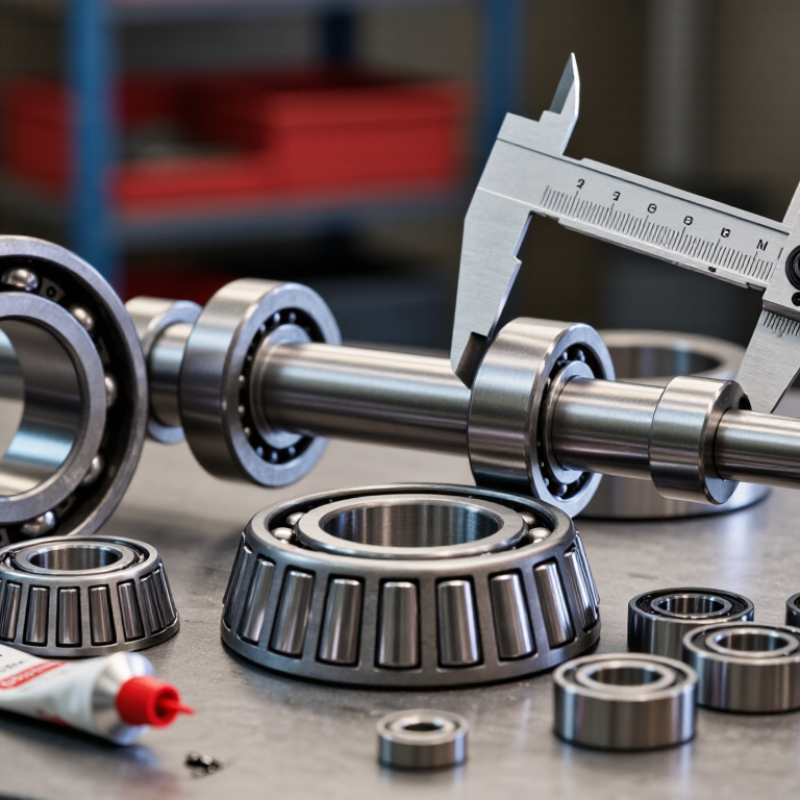
This guide will explain how to compare loads, dimensions, speed limits, materials, and lubrication needs. It will also cover single-row and matched-pair arrangements, plus the effects of clearance and preload. Think of a workshop bench: a clean micrometer, a marked shaft, and grease selected for the actual temperature range. Practical checks like these help turn a catalog choice into a reliable fit. Still, no checklist replaces application-specific engineering review. That is easy to forget. When loads fluctuate or failure would halt production, confirm the selection with the bearing manufacturer or a qualified engineer.
How to Choose the Right Taper Roller Bearing?

Classify Loads: Single-Row Bearings Support Axial Force in One Direction

How to Choose the Right Taper Roller Bearing?

A single-row tapered roller bearing carries radial load and axial load in one direction. Its angled rollers create a contact line that helps support combined forces. Picture a shaft pushed sideways by a helical gear: the bearing can resist that thrust, but only toward its designed direction. Reverse the thrust, and the arrangement may need an opposing bearing. Check the load direction during startup, braking, and normal operation—not just at steady speed.

Selection also depends on load magnitude, speed, shaft space, lubrication, and required service life. ISO 281:2007 defines methods for calculating dynamic load ratings and bearing rating life. Its basic rating life, L10, corresponds to 90% reliability for a group of identical bearings under stated conditions. This is a useful comparison, not a guarantee for every installation. Poor alignment or contaminated lubricant can shorten real service life; those details are easy to underestimate.

Tips: Confirm axial-force direction from the machine layout. Check the bearing’s load ratings and fit, then verify lubrication and alignment. If thrust can reverse, reconsider using one bearing alone. A small assumption here can become a noisy, hot shaft later.

How to Choose the Right Taper Roller Bearing?

Classify the loads: a single-row tapered roller bearing supports axial force in one direction, as well as radial load.

The chart shows directional capability, not a load rating. The supported direction depends on bearing orientation; use an opposed bearing arrangement when axial loads act in both directions. Check the manufacturer’s load ratings for the actual bearing and operating conditions.

Estimate Service Life: ISO 281 L10 Rating Life Represents 90% Reliability

When choosing a taper roller bearing, check its ISO 281 L10 basic rating life against the expected load and speed. L10 is the life that 90% of a sufficiently large group of identical bearings is expected to reach or exceed. The remaining 10% may fail earlier. That distinction matters. It is a statistical estimate, not a guarantee for one bearing.

For roller bearings, the basic calculation uses L10 = (C/P)^(10/3) million revolutions, where C is the basic dynamic load rating and P is the equivalent dynamic load. To estimate hours, include shaft speed: L10h = 1,000,000 × L10 / (60 × rpm). A higher load can reduce predicted life sharply. Check the actual radial and axial loads, alignment, lubrication, and operating temperature before comparing options. A dusty housing or thin lubricant film can make the estimate optimistic. Not a guarantee. ISO 281 also provides methods for adjusted life estimates, including reliability and lubrication-related effects. I would treat the basic L10 figure as a starting point, then review real operating conditions; the estimate is useful, but never perfectly tidy.

Select Dimensions: Check Bore, Outside Diameter, and Width Against ISO 355

How to Choose the Right Taper Roller Bearing?

Start with the three dimensions: bore, outside diameter, and total width. The bore must suit the shaft, while the outside diameter must fit the housing seat. Measure width across the assembled bearing, not just one separable component. Small errors matter. ISO 355 lists metric boundary dimensions and series designations for tapered roller bearings, helping you compare a candidate bearing with the space available. Match all three dimensions to the applicable series and check the bearing’s technical drawing; a similar-looking size is not enough.

Use a calibrated micrometer or caliper on clean, undamaged surfaces. Check the shaft and housing too, since wear or burrs can distort measurements. Measure twice. ISO dimensions describe nominal sizes, but the actual fit also depends on tolerances, load, temperature, and the equipment’s design. A tight housing fit can affect clearance, while excess movement may cause noise or uneven wear. It is easy to focus on bore size and overlook width, especially when replacing an older bearing. Verify the complete designation and installation requirements before ordering; dimensional agreement alone does not confirm that the bearing suits the application.

Check Precision and Fit: Use ISO 492 Tolerance Classes for Bearing Accuracy

When choosing a taper roller bearing, check its accuracy class against the shaft, housing, and operating speed. ISO 492:2023 sets tolerance limits for radial bearings. For a 30–50 mm bore, its table gives mean bore diameter deviations of 0 to −12 μm for Normal class, 0 to −10 μm for Class 6, and 0 to −8 μm for Class 5. Higher precision classes narrow these limits. Small differences matter.

Match the class to the assembly, not just the catalog number. A tighter bore tolerance can help when a controlled fit is essential, but it cannot correct a worn shaft or an out-of-round housing. Measure the shaft at several points with a micrometer, then compare the readings with the bearing maker’s fit recommendations and ISO tolerance limits. Check the housing seat too. It is easy to focus on the bearing alone.

There is a catch. ISO 492 describes dimensional and running accuracy; it does not guarantee quiet operation or long service life. Contamination, preload, and poor lubrication still matter. I would not specify the highest class automatically: it may add cost without improving a slow, lightly loaded assembly. Verify the actual tolerance requirements against the applicable standard edition before ordering.

Verify Lubrication and Speed: Compare Operating Conditions With Manufacturer Limits

When choosing a taper roller bearing, check lubrication and speed together; either can limit service life. A grease that works at room temperature may become too thin or too viscous once the bearing warms. Compare the lubricant’s viscosity at operating temperature with the manufacturer’s guidance, then check the permitted speed for the selected lubricant, cage, and seal. Heat matters. For grease-lubricated units, the speed factor n·dm can help compare designs, but it is not a universal pass-or-fail limit. Housing airflow, preload, and relubrication intervals change the result. A warm housing can mislead.

Use the maker’s operating limits for the exact bearing configuration, not a catalogue speed copied from a similar size. ISO 15312:2018 describes thermal reference speed under standardized heat-removal conditions; real installations may run hotter or cooler. Check the shaft speed, load, and expected ambient temperature against those limits. ISO 281:2007 defines basic rating life L10 as one million revolutions at 90% reliability, but that calculation does not promise the same life in poor lubrication or contaminated service. Still, the calculation is not perfect. Record actual temperature and noise during commissioning, then revisit the lubricant quantity and interval if conditions differ from the design assumptions.

FAQS

What loads can a single-row tapered roller bearing support?

It supports radial loads and axial thrust in one direction. Its angled rollers handle combined forces. Direction matters.

What happens if axial thrust reverses?

A single bearing may not resist reverse thrust. Consider an opposing bearing, especially during startup or braking. Check both directions.

What should I check before selecting a bearing?

Review load, speed, shaft space, lubrication, alignment, and expected service life. Check operating temperature too. Easy to miss.

What does L10 life mean?

L10 is the life that 90% of a large group of identical bearings may reach or exceed under stated conditions. It is an estimate, not a promise.

How is basic roller-bearing L10 calculated?

Use L10 = (C/P)^(10/3) million revolutions. C is the basic dynamic load rating, and P is the equivalent dynamic load. Include shaft speed to estimate hours.

Can calculated life differ from actual service life?

Yes. Dust, poor alignment, thin lubricant film, or high temperature can shorten service life. Real conditions are messy.

How do ISO 492 tolerance classes affect fit?

For a 30–50 mm bore, mean bore deviations are 0 to −12 μm in Normal class, 0 to −10 μm in Class 6, and 0 to −8 μm in Class 5. Match the class to the assembly.

Does a tighter tolerance guarantee better performance?

No. It does not guarantee quiet running or longer life. Measure the shaft at several points and inspect the housing seat. I’d think twice before choosing the highest precision class automatically.

Conclusion

Choosing the right Taper Roller Bearing starts with understanding the loads it must carry. A single-row design supports radial loads and axial force in one direction, so the arrangement should match the direction and magnitude of the forces in service. Next, estimate the required service life using the ISO 281 L10 rating life, which indicates the life that 90% of a sufficiently large group of bearings is expected to reach or exceed under stated conditions.

Confirm that the bore, outside diameter, and width suit the shaft and housing, checking the relevant dimensions against ISO 355. Consider the required accuracy and fit by reviewing ISO 492 tolerance classes alongside the application’s operating needs. Finally, compare expected speed, temperature, load, and lubrication conditions with the bearing manufacturer’s specified limits. Checking each factor together helps ensure a suitable, reliable selection.


Oliver

Oliver

Oliver is a seasoned marketing professional with a wealth of expertise in driving brand awareness and engagement. With a deep understanding of our company's product offerings, he consistently delivers high-quality content that enriches our professional blog. His insights not only shed light on......