10 Best Clutch Disc Manufacturers for Global Buyers

Time:2026-09-30 Author:Madeline
0%

A Clutch Disc is a small component with a demanding job: it must transfer engine torque smoothly, tolerate heat, and engage predictably through thousands of gear changes. For global buyers, choosing a manufacturer involves more than comparing prices. Material consistency, friction performance, dimensional accuracy, production capacity, and traceable quality checks all matter. A disc that looks sound on a warehouse shelf may still judder or wear unevenly after installation.

This guide compares ten manufacturers through practical purchasing criteria, including product range, manufacturing capability, testing practices, and support for different vehicle applications. Look for evidence, not just confident claims: clear specifications, sample inspection reports, and answers about facings, hubs, and torsional dampers are useful starting points. Small details count. A spline mismatch can stop installation.

A named expert quotation should be verified against a reliable source before publication; inventing an attribution would weaken buyer confidence. The editorial principle guiding this comparison is simple: “A reliable clutch disc is proven by consistent performance, not by a catalogue promise.” That line is an original summary, not a quotation from a named specialist. Buyers should still check application fit and regional support directly with each supplier. No shortlist replaces that work.
10 Best Clutch Disc Manufacturers for Global Buyers

What Clutch Discs Are and How They Work

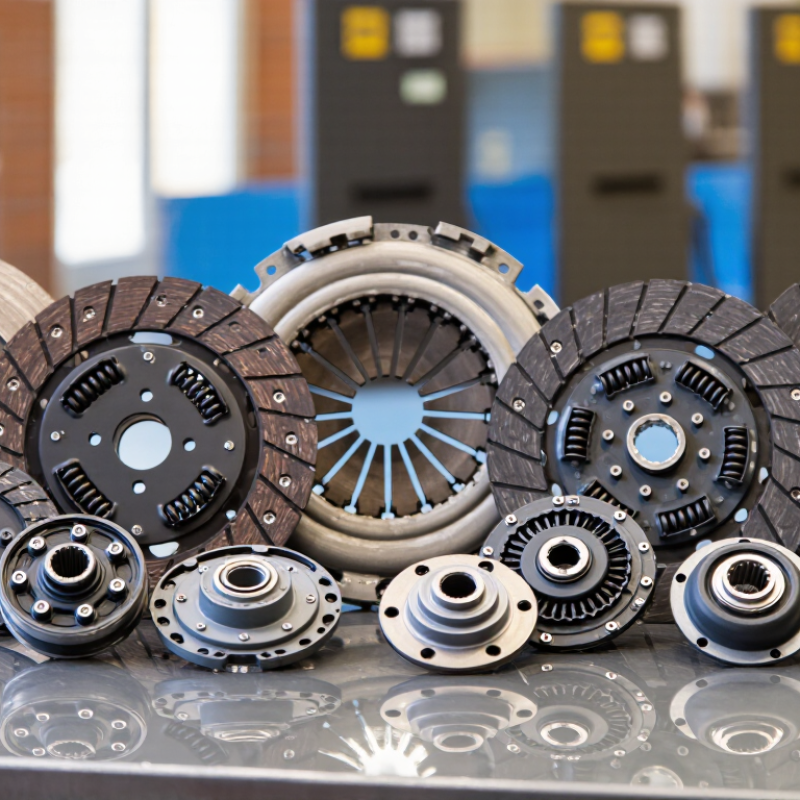
A clutch disc is the friction link between an engine and a manual transmission. It sits between the flywheel and pressure plate. The disc has friction facings, a splined hub, and torsion springs. It is a friction sandwich. The hub connects to the transmission input shaft, while the outer facing touches the rotating flywheel.

When the driver releases the clutch pedal, the pressure plate squeezes the disc against the flywheel. Friction then transfers engine torque into the gearbox. When the pedal is pressed, the release mechanism reduces clamping force. The disc separates, allowing smoother gear changes. Torsion springs absorb sudden torque pulses and reduce vibration through the driveline. Without them, engagement can feel harsh and noisy.

Heat changes everything. Repeated slipping can glaze the facing, create a sharp smell, or produce clutch shudder. Oil contamination may cause uneven engagement. A workshop inspection often checks facing wear, spring looseness, rivet depth, and disc runout. A reliable manufacturer should control friction consistency, balance, dimensional accuracy, and high-temperature durability. Technical drawings and test records matter for global buyers. The textbook explanation is clean, but real vehicles are not. Driving habits, traffic, load, and flywheel condition can change service life dramatically.

Key Factors for Comparing Clutch Disc Manufacturers

Choosing among the 10 best clutch disc manufacturers requires more than comparing prices. Start with engineering capability and product fit. Check friction material, hub design, spline accuracy, torsional springs, and allowable temperature ranges. A reliable manufacturer should provide test data for wear, burst strength, thermal fade, and engagement smoothness. Dimensional tolerances matter too; a small mismatch can cause vibration, noise, or premature wear.

Experience is visible in practical details. Ask whether the manufacturer supports different vehicle platforms, operating loads, and regional climate conditions. Review quality records, inspection procedures, material traceability, and warranty terms. Factory audits can reveal storage problems, weak calibration control, or inconsistent assembly. Samples should be tested under realistic load cycles, not only displayed in a clean laboratory. Supplier communication also matters when drawings change or field failures appear. No factory is perfect, and impressive documents can still hide production gaps.

Tips: Compare three samples. Measure spline fit, runout, lining thickness, and spring response. Request batch records and independent test reports. Speak with technicians, not only sales staff. Do not select the lowest quote before calculating replacement costs, downtime, and shipping risk. My own comparison may favor measurable evidence too heavily, but transparent data usually gives buyers a safer starting point. Avoid promises that sound absolute. A manufacturer willing to discuss limitations often deserves closer attention.

10 Best Clutch Disc Manufacturers for Global Buyers - Key Factors for Comparing Clutch Disc Manufacturers
# Comparison Dimension Priority What Global Buyers Should Compare Recommended Evidence or Data Common Warning Sign
1 Application Coverage Critical Ability to supply discs for passenger vehicles, commercial vehicles, agricultural machinery, industrial equipment, or specialized drivetrains. Vehicle and equipment application catalog, cross-reference list, dimensional drawings, and confirmed part-number coverage. The supplier offers only generic discs without verified application or interchangeability information.
2 Dimensional Accuracy Critical Consistency of outer diameter, hub spline profile, hub offset, friction lining thickness, rivet pattern, and overall disc height. Approved technical drawings, inspection reports, calibrated measuring equipment, and first-article inspection records. Dimensions are provided only as approximate values or differ between drawings and delivered samples.
3 Friction Material Performance Critical Stable friction behavior, wear resistance, heat tolerance, engagement smoothness, and resistance to fade under the intended operating conditions. Material specifications, friction and wear test results, temperature limits, batch traceability, and application-specific validation. No material specification is available, or performance claims are not supported by test documentation.
4 Hub and Spline Quality Critical Accuracy of spline geometry, hub strength, torsional durability, and compatibility with the mating transmission shaft. Spline measurements, hardness records, torsional test data, heat-treatment controls, and compatibility confirmation. Spline dimensions are described only by nominal shaft size without a complete profile or tolerance specification.
5 Damping System Design High Configuration of torsion springs, spring windows, friction washers, and damping characteristics for vibration and noise control. Damping diagrams, spring-load data, torsional characteristic curves, noise and vibration test results, and application validation. The disc uses a standard damper design without confirming engine torque, vibration behavior, or operating conditions.
6 Manufacturing Quality Control High Control of riveting, lining bonding, runout, balance, surface finish, heat treatment, and final assembly processes. Documented quality procedures, in-process inspection plans, final inspection records, calibration logs, and nonconformance procedures. Quality checks are limited to visual inspection, with no measurable acceptance criteria or retained records.
7 Testing and Validation High Extent of bench testing, endurance testing, thermal testing, burst or overspeed testing where applicable, and vehicle-level validation. Test plans with defined loads, temperatures, cycle counts, acceptance criteria, sample identification, and signed reports. Test reports omit test conditions, sample numbers, measured results, or pass/fail criteria.
8 Production Capacity and Lead Time High Ability to support trial orders, regular replenishment, seasonal demand, and urgent replacement requirements. Monthly capacity by product family, standard production lead time, minimum order quantity, forecast policy, and shipment history. Lead times are quoted without separating sample production, tooling, normal production, and peak-season capacity.
9 Export and Packaging Capability Medium Suitability of packaging for international transport, moisture protection, labeling, palletization, and customs documentation. Packaging specifications, carton and pallet dimensions, product labeling samples, export documentation process, and damage-rate records. Products are shipped without corrosion protection, impact protection, traceable labels, or clear packing lists.
10 Warranty and Technical Support Medium Clarity of warranty coverage, claim handling, root-cause analysis, replacement policy, and engineering support after delivery. Written warranty terms, claim response time, corrective-action format, technical contact details, and installation guidance. Warranty conditions exclude most operating situations or provide no defined response time for quality claims.
Buyer note: The most reliable comparison should combine documented specifications, verified test evidence, sample inspection, and application-specific validation rather than relying on price alone.

Regional Strengths of Leading Global Suppliers

European clutch disc manufacturers often emphasize precision, stable friction performance, and strict process control. Their products suit passenger vehicles and demanding commercial applications. Many facilities use automated balancing, controlled heat treatment, and detailed inspection records. This regional strength helps buyers reduce vibration and improve pedal consistency.

Asian suppliers often compete through flexible production and strong supply-chain coordination. They can support large volumes, custom dimensions, and shorter development cycles. Several manufacturing centers also provide competitive tooling and material sourcing. However, low pricing alone is not enough. Buyers should verify friction testing, spline accuracy, packaging quality, and batch traceability before placing repeat orders.

North American manufacturers are known for application engineering and aftermarket responsiveness. Their teams often provide practical fitment guidance and technical documentation. Regional suppliers in South America and the Middle East may offer useful distribution advantages, especially for local vehicle fleets. No region is perfect. In supplier evaluations, I have found that communication delays can damage an otherwise excellent product.

Tips: Compare regional strengths with your operating conditions. Request test reports, sample discs, warranty terms, and production references. Check performance after heat cycles, not only during initial inspection. A reliable supplier should explain limitations clearly. That honesty is easy to overlook.

Regional Automotive Production: A Market-Scale Proxy for Clutch Disc Suppliers

Asia and Oceania lead in vehicle production, followed by Europe and North America. Production volume offers a broad indication of regional demand and manufacturing ecosystems; it does not measure clutch disc supplier output. Figures are approximate, rounded 2023 totals based on OICA data.

Quality, Materials, Testing, and Certification Standards

For global buyers, a clutch disc is more than a friction part. It must transfer torque smoothly, tolerate heat, and maintain stable engagement after repeated use. Material selection deserves close attention. Organic linings usually offer quiet operation and comfortable engagement. Ceramic compounds handle severe heat but may feel less forgiving. Semi-metallic materials can balance durability, cost, and friction performance. The hub, torsion springs, rivets, and damping plate also need compatible strength and corrosion resistance.

Reliable manufacturers should provide measurable evidence, not attractive samples alone. In supplier audits, buyers should review friction testing, dimensional inspection, and batch traceability. A dynamometer test can simulate repeated starts, high-temperature cycles, and torque changes. Fatigue testing checks spring durability. Burst testing examines structural safety under excessive rotational speed. Micrometer readings should confirm spline dimensions, runout, and disc thickness. Small deviations can create vibration or premature wear.

Certification supports confidence, but it is not the whole answer. ISO 9001 shows controlled quality processes, while IATF 16949 may indicate stronger automotive manufacturing discipline. Material certificates, calibration records, and inspection reports should match the actual production batch. Ask for test dates and acceptance limits. Certificates can become outdated. I have seen suppliers pass an audit yet struggle with consistency during volume production. That gap deserves attention. Buyers should also verify corrective-action records, packaging protection, and storage conditions before approving a long-term order.

How Global Buyers Can Select the Right Manufacturer

10 Best Clutch Disc Manufacturers for Global Buyers

How Global Buyers Can Select the Right Manufacturer

Selecting a clutch disc manufacturer requires more than comparing unit prices. In purchasing reviews, buyers should examine material traceability, friction consistency, heat resistance, and documented testing. A reliable supplier can provide batch records, dimensional reports, and performance data before shipment. This matters because a clutch disc may face repeated thermal cycling, dust exposure, and heavy traffic.

Market evidence supports a careful sourcing strategy. Fortune Business Insights reported that the global automotive clutch market reached billions of dollars in recent years, with replacement demand supporting steady growth. S&P Global Mobility also reported that the average U.S. vehicle age reached 12.6 years in 2024. Older vehicles create more aftermarket opportunities, but they also require wider compatibility and dependable fitment information. Ask manufacturers for application catalogs, tolerance ranges, and failure-rate data.

Price is only one signal. A cheaper disc can create higher warranty costs, installation delays, and customer complaints. Check whether the manufacturer controls stamping, lining bonding, balancing, and final inspection internally. Independent certification can strengthen confidence, although certificates alone do not prove real-world durability. Request samples and test them under your expected load conditions. The process is not perfect. Supplier claims may look impressive, yet field performance can differ. A small pilot order, clear acceptance criteria, and regular communication reduce that risk. Choose evidence over polished promises.

FAQS

What is a clutch disc?

A clutch disc connects the engine to a manual transmission. It sits between the flywheel and pressure plate. Its friction facings transfer torque through a splined hub.

How does a clutch disc transfer engine power?

Releasing the pedal lets the pressure plate clamp the disc against the flywheel. Friction then sends engine torque into the gearbox. Pressing the pedal reduces clamping force and allows gear changes.

What do torsion springs do inside the disc?

Torsion springs absorb sudden torque pulses during engagement. They also reduce vibration and noise through the driveline. Without them, engagement may feel harsh.

What can repeated slipping do to a clutch disc?

Repeated slipping creates heat and may glaze the friction facing. A sharp smell or clutch shudder can appear. Traffic, heavy loads, and driving habits affect service life.

How can oil contamination affect clutch performance?

Oil on the friction surface may cause uneven engagement. The vehicle can shudder or transmit power inconsistently. Inspection should identify the leak before replacing parts.

What should buyers compare between clutch disc manufacturers?

Compare friction material, spline accuracy, hub design, spring response, and temperature limits. Measure three samples when possible. Check runout, lining thickness, and spline fit.

Which tests can reveal clutch disc quality?

Dynamometer tests can simulate repeated starts and high-temperature cycles. Fatigue testing examines spring durability. Burst testing checks structural strength at excessive rotational speed.

Are certificates enough when selecting a supplier?

No. Certificates support confidence but cannot prove every production batch is consistent. Review test dates, acceptance limits, calibration records, and traceability. A clean audit can still miss factory problems.

What practical signs suggest a supplier deserves closer review?

Look for clear drawings, batch records, independent test reports, and corrective-action records. Factory audits may reveal weak calibration or poor storage. A supplier discussing limitations may be more credible than one making absolute promises.

Conclusion

A Clutch Disc is a key component in a vehicle’s manual transmission system, transferring engine power to the gearbox while allowing smooth engagement and disengagement. This article explains how clutch discs work and highlights the main factors global buyers should consider when comparing manufacturers, including production capacity, engineering expertise, material selection, product consistency, customization options, delivery reliability, and technical support. A careful evaluation helps buyers identify suppliers that can meet both performance and commercial requirements.

The article also examines the regional strengths of leading suppliers, along with the importance of quality control, friction materials, durability testing, and recognized certification standards. Buyers are encouraged to assess product specifications, testing procedures, quality management systems, warranty policies, communication efficiency, and after-sales service before making a decision. By matching a manufacturer’s capabilities with vehicle application, operating conditions, volume needs, and compliance expectations, international purchasers can reduce risk and build a dependable long-term supply relationship.


Madeline

Madeline

Madeline is a dedicated marketing professional with a wealth of expertise in our company's core offerings. With a keen understanding of the industry, she brings a unique perspective to her role, consistently delivering high-quality content that highlights the superior aspects of our products. As......